


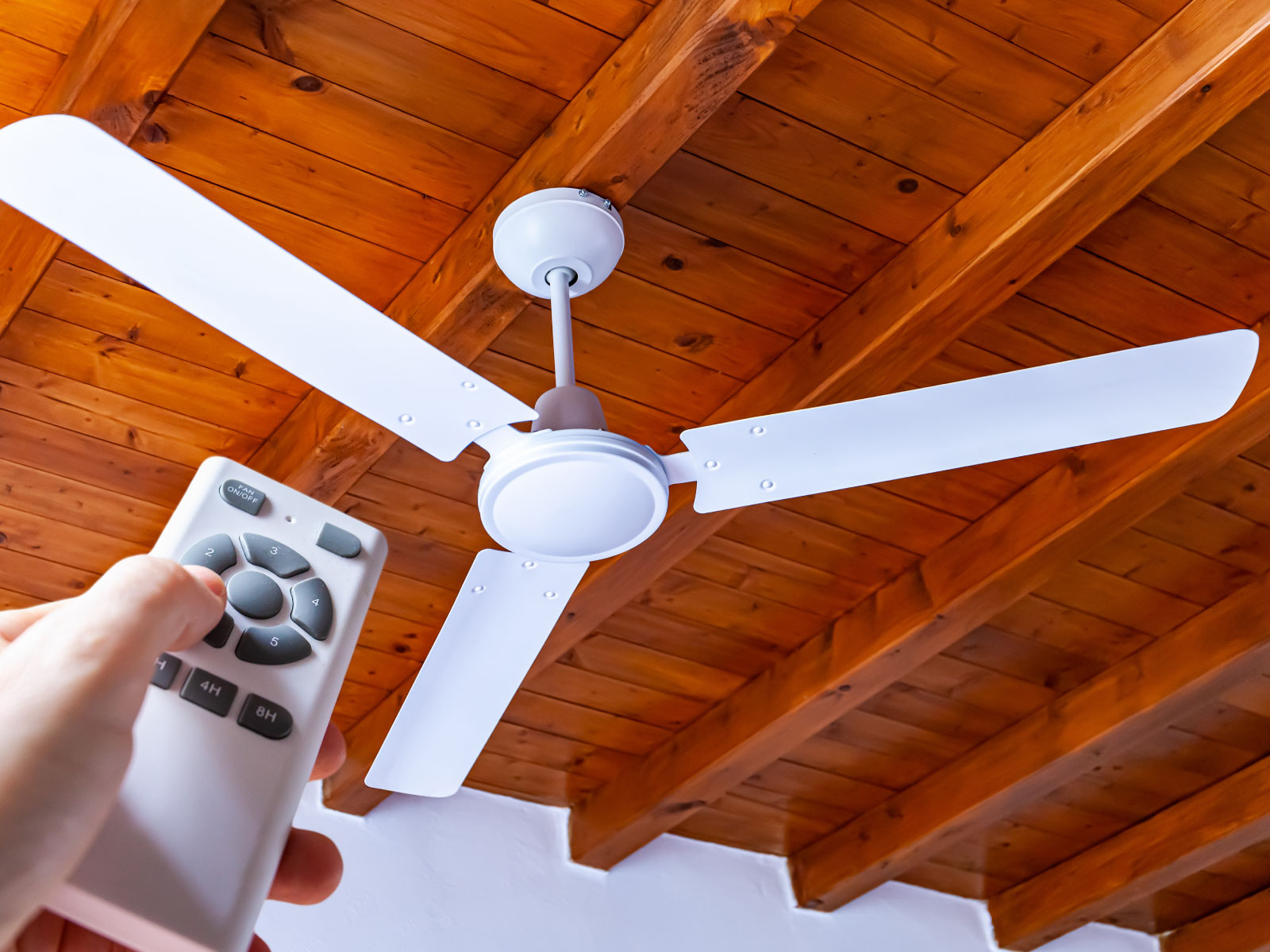
During hot Alberta summers, using a ceiling fan is often suggested as an energy-saving measure, and for good reason.
Your ceiling fan moves air inside the room, which speeds up evaporation and makes you feel cooler than the room actually is. Your air conditioner, on the other hand, works hard to drop the actual temperature of every square foot in the house.
That small difference is the whole reason the ceiling fan can save you money, if you use it right. Here’s the actual math behind it.
Costs of running a ceiling fan vs. A/C
A standard ceiling fan uses about 40-75 watts of electricity per hour, while a central air conditioner uses 2,000-5,000 watts.
At an electricity rate of approximately 8¢/kWh, running a fan all day costs about $2-$4 a month, and running the A/C costs about $4-$10 a day.
Where the real savings come from
Running the fan is cheap. But the savings come from the thermostat.
According to Natural Resources Canada, setting the thermostat just 2°C higher while running a ceiling fan can cut your air conditioning costs by nearly 14%.
A ceiling fan adds only a few dollars a month to your electricity bill. In comparison, even the smallest reduction in A/C use can save far more, making a ceiling fan one of the most cost-effective ways to reduce your summer cooling costs
Use the direction switch
Most ceiling fans have a small switch near the blades that flips the direction. Using the right setting each season can help you save on your energy bill.
- In summer, you want the blades spinning counterclockwise so the air blows straight down and creates that cooling breeze.
- In winter, flip the blades clockwise, on low speed, to pull warm air off the ceiling back into the room.
How to choose the right ceiling fan
- Consider DC motor fans, which use 15-30 watts vs. 50-100 for older AC motor fans.
- Look for ENERGY STAR certified fans, since they use up to 60% less energy than standard models.
- Size the fan for the room. Although traditional 52-inch fans are most popular, this size works best for rooms that are over 225-400 sq ft. If your room is smaller, a 29-39" fan will work just fine.

If your energy bill still feels too high
A ceiling fan and a smarter thermostat setting will only get you so far. If your energy bills keep climbing even after small fixes, the problem is usually bigger than one appliance. Think leaky windows, thin attic insulation, or an aging furnace working harder than it should.
A home energy audit gets to the bottom of it. Our certified pro walks through your home to find exactly where you’re losing energy, then provides a report showing what to fix first for the biggest payoff.
Want more energy-saving tips? Here’s more ways to lower your energy bills while keeping your home cool this summer.
Frequently asked questions about ceiling fans
Do ceiling fans really lower my energy bill?
Yes, indirectly. The fan itself barely costs anything to run. The savings come from being able to raise your thermostat a few degrees while staying comfortable, which cuts how often your A/C runs.
How many degrees can I raise my thermostat with a fan on?
Natural Resources Canada recommends just 2°C higher, paired with a ceiling fan, to cut A/C costs by nearly 14% without losing comfort.
Should I leave the fan on when I leave the room?
No. Fans cool people, not air. An empty room gets no benefit, just a bigger energy bill.
Which way should my fan spin in summer?
Counterclockwise, so air blows straight down and creates a breeze.
Which way should my fan spin in winter?
Clockwise, on low speed, to push warm air from the ceiling back down into the room.
Are DC motor fans worth the extra cost?
Usually yes. They use noticeably less power than standard AC motor fans for the same airflow, so they pay for themselves over time.
Can a ceiling fan replace my air conditioner?
On extremely hot days, you still need the A/C to stay comfortable. The ceiling fan’s job is to reduce how hard and how often the A/C has to run, not replace it.





.jpg)