Most homeowners have a mental list of things worth checking. Smoke detectors, water heater, the roof. But radon rarely makes that list.
There’s no way to notice radon on your own since it has no smell and no colour. This is why about 1 in 5 homes in Canada have levels above what Health Canada considers safe.
Here’s what radon actually is, what the numbers mean, and what to do if a test comes back high.
What is radon?
Radon is a naturally occurring, invisible, odourless gas that comes up from the ground. It’s formed from the breakdown of uranium in soil, rock and water.
The suggested level of radon in Canada is 200 Bq/m³. If your home tests above that, Health Canada recommends taking action within a year, sooner if the level is significantly higher.
Radon works its way into a home through whatever path is easiest, most commonly:
- Cracks and gaps in the foundation
- Gaps around pipes and wiring that pass through the floor or walls
- Sump pits and floor drains
- Construction joints where the foundation meets the walls
Radon is radioactive. But in the open air or in low concentrations, it’s harmless.
When is radon dangerous?
Here’s the bad news: The effects of radon can be severe. Radon that builds up in confined spaces over time and in high amounts can be deadly.
Did you know that radon is the leading cause of lung cancer among people who’ve never smoked in Canada? Exposure to radon significantly increases the risk of developing lung cancer.
Detecting, measuring and controlling radon calls for specialized equipment. Keep in mind, even if your neighbour’s radon level is low, your home’s could be much higher—radon can vary greatly from one house to another. Testing your own home is the only way to know.
Testing your home for radon gas
Let’s put your mind at ease: radon buildup is entirely preventable. If it becomes a problem in your home, it can be corrected!
Health Canada recommends a long-term test, at least 91 days, since radon levels shift with the seasons and even day to day. A test kit sits in your lowest lived-in level, usually the basement, and gets sent to a lab once the testing period is done.
Health Canada recommends testing during the heating season, since closed windows and doors mean less fresh air diluting whatever radon is coming up from the ground. A long Alberta winter is when radon levels tend to be at their worst, and exactly when a test will catch it.
Digital home radon detectors exist too, but they’re less reliable. They’re mostly useful for a quick check before deciding whether a longer test is worth doing.
What is radon mitigation?
Radon mitigation is the process of reducing the concentration of radon gas in your living space.
The good news is that most radon problems are fixable, most often without major renovations. Mitigation systems will bring levels down significantly.
How radon mitigation works
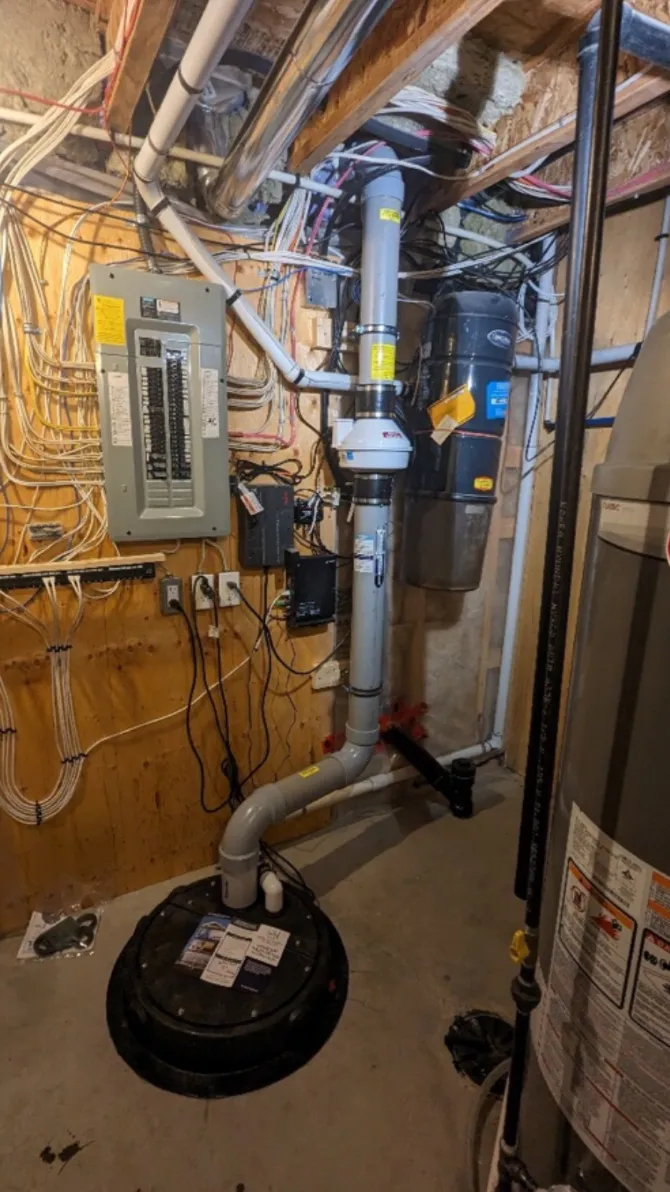
- The most common fix is a depressurization system. A pipe and fan system draws radon from beneath your foundation and vents it outside before it builds up indoors.
- Ventilation system upgrades might include a vent pipe extending from your basement to the roof. Paired with a fan, these will draw radon gas from the soil and expel it. Out in the open air, radon gas is no longer harmful.
- A radon monitor gives real-time access to your home’s radon gas concentration, humidity, and temperature. Radon reporting and notifications go directly to your smartphone when your levels are too high, giving you 24/7 peace of mind.
A radon mitigation system needs to be sized and installed correctly for your specific foundation, and a poorly installed system can actually make things worse by depressurizing the wrong area of the house.
Testing again after mitigation
A mitigation system isn’t a one-and-done fix you can forget about. Test again after it's installed to confirm it’s actually working, and it’s worth re-testing every 5 years even if previous radon levels were low. If your radon levels were between 100-199 Bq/m³, consider testing again within 1-2 years.
Not feeling up for DIY? You can call a pro to take care of radon inspection and mitigation for you.
Ready to be free of radon?
Whether you’re testing for the first time or looking to reduce elevated radon levels, ATCO Energy can help. From professional radon testing to expert mitigation, our technicians will guide you through the process, install a high-quality system backed by a 5-year performance warranty and give you peace of mind that your home is protected.
Limited time offer: Get a full radon assessment and monitor for only $298.
Offer ends November 27, 2026. Available in Calgary, Edmonton, Red Deer, and applicable ATCO Energy Home Services areas.
Frequently asked questions about radon
What is considered a dangerous level of radon?
Health Canada considers anything above 200 Bq/m³ to be dangerous.
How long does a radon test take?
Health Canada recommends a minimum of 91 days, since radon levels change with the seasons. Short-term tests exist but are less reliable for making a mitigation decision.
When’s the best time of year to test for radon?
During the heating season, roughly October to April. Closed windows and doors mean less fresh air mixing in, so this is when radon levels are at their highest, and easiest to catch with a test.
Can I test for radon myself?
Yes. A radon test kit is inexpensive and simple to use. You place it in your lowest lived-in level and send it to a lab once the testing period ends.
Can I install a radon mitigation system myself?
It’s not recommended. A mitigation system needs to be sized correctly for your home’s foundation, and an improperly installed system can be ineffective or even make radon levels worse in parts of the house.
How effective is a radon mitigation system?
A professionally installed radon mitigation system typically bring indoor radon down to levels close to outdoor air, roughly 10-40 Bq/m³.
Does every home have radon?
Yes, at some level. Radon comes from the ground, so it’s present in nearly all homes. The concern is only when levels build up higher than what’s considered safe.
How often should I re-test for radon?
Testing again after any mitigation work confirms it’s working. Beyond that, you should re-test every few years since radon levels can change over time.




.jpg)