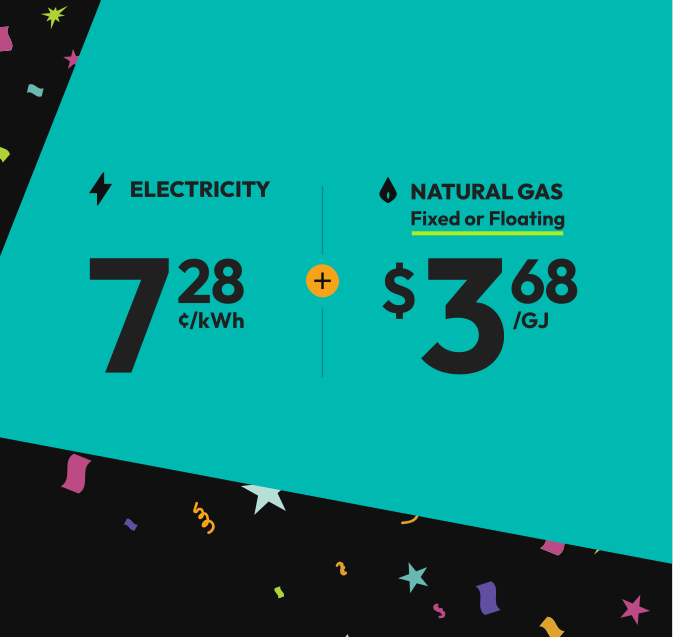
When it comes to choosing your electricity and natural gas plan in Alberta, there are two options: lock in a fixed rate, or go with a floating rate that moves with the market.
If you haven't chosen either, you may be on the Rate of Last Resort (ROLR) — Alberta’s default electricity rate, and typically the most expensive option available.
Here’s what each option means, and how to figure out which one fits your household.

What is a fixed rate plan?
With a fixed rate plan, you lock in a price per unit of energy for the length of your term. Whether market rates go up or down during that period, your rate stays the same.
The main appeal is predictability. You know what you’re paying per kilowatt hour (kWh) for electricity or gigajoule (GJ) for natural gas before the bill arrives, which makes budgeting easier, especially through Alberta’s long, energy-intensive winters.
- Rate stays the same for your entire term
- Protected if market prices spike
- Easier to budget month-to-month
What is a floating rate plan?
A floating rate plan fluctuates with the energy market. Your rate is typically set monthly based on market conditions, which means it can go up or down depending on supply, demand, and other factors.
When market prices are low, a floating rate can work in your favour. When they spike, your bill goes up with them.
- Rate changes monthly based on the market
- Can be cheaper than fixed rates when market prices are down
- Less predictable month-to-month
How fixed and floating rate plans compare
ATCO Energy offers both fixed and floating rate plans for electricity and natural gas. The right one depends on your budget, your comfort with risk, and how much attention you want to pay to energy prices each month. Here’s how they compare:
Which plan is right for you?
It comes down to how you feel about risk, how tightly you manage your budget, and how much attention you want to pay to Alberta’s energy market.
A fixed rate plan might suit you if:
- You’re on a tight budget and need predictable bills
- You don’t want to think about energy prices
- You’re planning to stay in your home for a while
- You’ve seen your bills spike in past winters and want more stability
A floating rate plan might suit you if:
- You’re comfortable with some variability in your bills
- You want flexibility with no long-term pricing commitment
- You follow the energy market and want to take advantage of low prices
- Your energy use is lower or more predictable than average
Worth knowing: Alberta’s energy market isn’t always predictable, particularly in winter when energy use climbs. If your home is heated mainly with natural gas or electricity, those seasonal price changes can be more noticeable.
What about the long-term costs?
The answer depends on when you sign up and what the market does during your term.
Alberta’s energy rates can be hard to predict. If you lock in a fixed rate before prices rise for an extended period, it can save you money. But if prices drop after you lock in, you may pay more than customers on a floating rate during that time.
Most households choose their energy plan based on their comfort with uncertainty rather than trying to time the market.
Can you switch between plans?
Whether you’re on ATCO Energy’s fixed or floating plan, you can change your plan at any time with no penalty. If your situation or priorities change, it’s easy to compare your options and switch plans.
It’s worth revisiting your plan once a year, particularly in spring, before summer cooling season and in fall, before winter heating demand picks up. What worked last year may not be the best fit now.

Frequently asked questions about fixed and floating energy plans
What’s a fixed rate energy plan?
A fixed rate plan locks in a set price per unit of energy for the length of your term. Your rate stays the same regardless of what happens in the energy market during that period.
What’s a floating rate energy plan?
A floating rate plan fluctuates based on market conditions. When market prices are low, you pay less. When they rise, so does your rate.
Is a fixed or floating rate better in Alberta?
It depends on the market and your priorities. Alberta’s energy market can be unpredictable, particularly in winter. A fixed rate offers protection during price spikes. A floating rate can be cheaper when market prices are low. Most households choose based on how much bill predictability matters to them.
Can I switch from a fixed rate to a floating rate?
Yes, ATCO Energy customers can switch plans at any time. You can compare your options and sign up in minutes.
What is the Rate of Last Resort (ROLR)?
The ROLR is Alberta’s default energy rate for customers who haven’t signed up with a competitive energy retailer. It’s set by the Alberta Utilities Commission (AUC) and is typically higher than both fixed and floating market rates. If you’re not sure which plan you’re on, it’s worth checking your energy bill.